
Events
Voice of AI – From Data Foundations to AI Context: Rethinking Retail for the Agentic Era
From Data Foundations to AI Context: Rethinking Retail for the Agentic Era
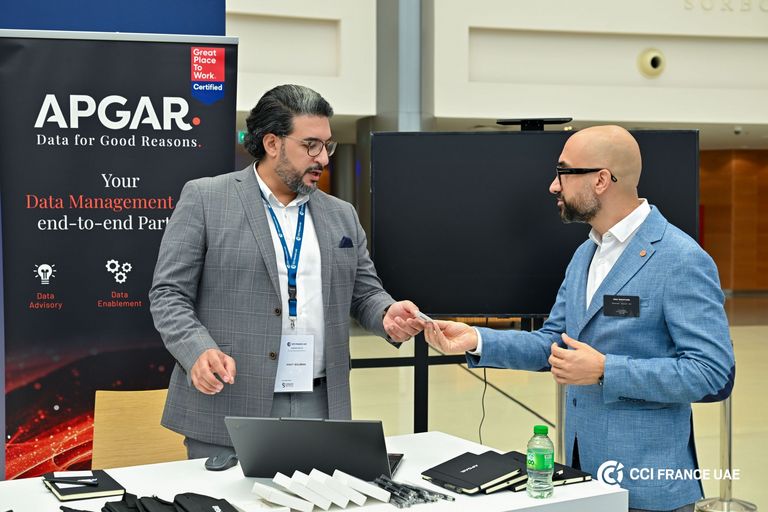
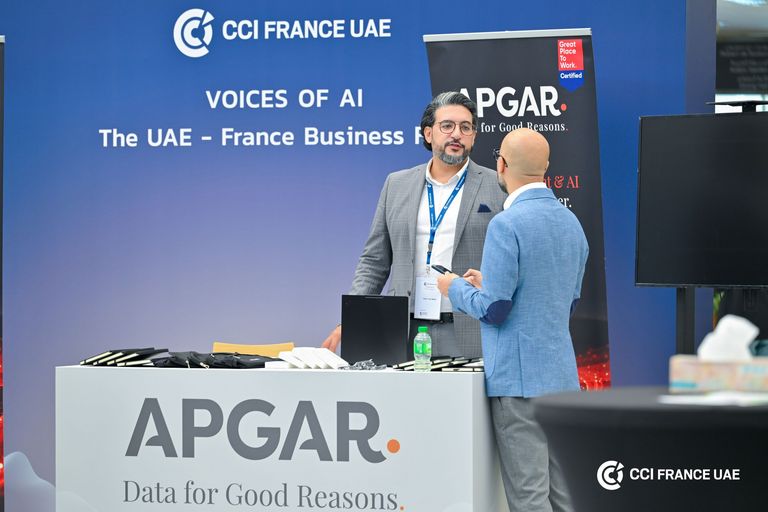
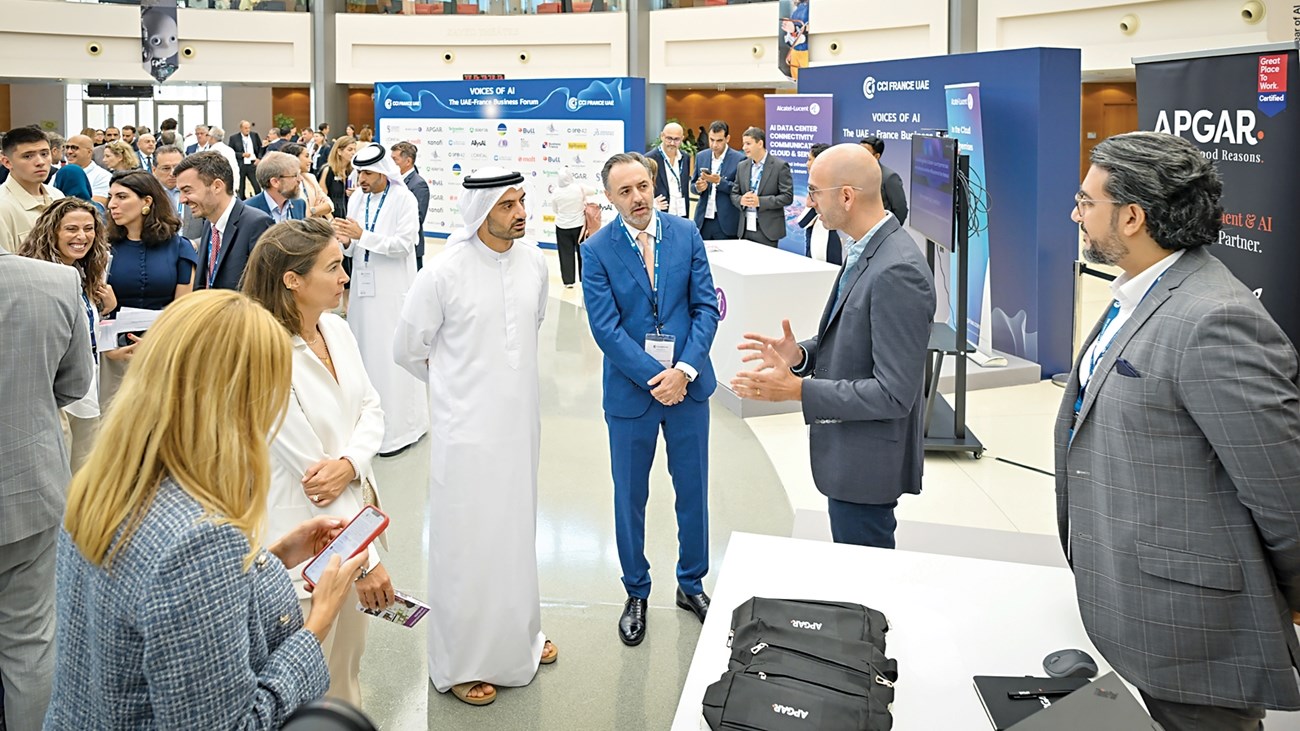
APGAR was pleased to take part in the Voices of AI event, organized in Abu Dhabi by the CCI France UAE, bringing together business leaders and AI experts to discuss how organizations can prepare for the next generation of artificial intelligence.
For APGAR, the conversation highlighted a fundamental shift already underway in Retail: organizations are no longer preparing data exclusively for people, dashboards and analytics. Increasingly, the consumers of enterprise data are AI models and intelligent agents.
And that changes what a strong data foundation needs to deliver.
Retail Does Not Have a Data Problem.
Retail Does Not Have a Data Problem
Retail is not short on data.
Point-of-sale systems, e-commerce platforms, loyalty programs, supply chains and customer service operations generate enormous volumes of information every day. Over the past decade, many retailers have therefore invested heavily in building stronger data foundations.
Reliable data platforms, DataOps, governance, metadata management and Master Data Management have helped organizations make data more accessible, consistent and trustworthy.
These capabilities remain essential. But they are no longer the finish line.
The fundamental change is happening on the other side of the data ecosystem: the consumer of data itself is changing.
Today, data is increasingly being consumed not only by employees reading dashboards and reports, but by AI models and intelligent agents expected to interpret information, make recommendations and, increasingly, take action.
Why a Strong Data Foundation Is No Longer Enough
A common assumption is that once the platform, governance and MDM are in place, AI can simply be connected to the existing environment.
In practice, this is where many initiatives begin to struggle.
An AI pilot may perform well in one region but poorly in another. Two teams may deploy different AI solutions and receive contradictory answers about the same customer. Metrics that appear straightforward to employees can suddenly become ambiguous when interpreted by a machine.
The immediate reaction is often to question the model or the quality of the underlying data.
But another layer is frequently missing: business context.
What does “customer” actually mean across the organization? What qualifies someone as “active” or “VIP”? Which source should be trusted when systems disagree? Which business rule applies in a specific market? Who owns a definition or decision?
Employees often answer these questions using knowledge accumulated through experience. AI cannot rely on that implicit understanding.
AI Cannot “Read the Room”
Human employees naturally accumulate context.
They learn the policies, procedures, exceptions, business rules and informal knowledge surrounding the data they use. Over time, they know which source to trust, which definition applies and who to ask when something is unclear.
AI models and autonomous agents do not have that same organizational memory.
If this knowledge remains scattered across documents, processes and people’s heads, AI is forced to operate without part of the information humans use to make informed decisions.
Without context, AI can process data. It cannot reliably interpret what that data means for the business.
As AI agents become more embedded in enterprise operations, this distinction becomes increasingly important. Organizations are no longer governing only reports and dashboards. They also need to consider the decisions and actions AI systems make from that information.
From Data Foundations to AI Context.

Enterprise Context Management
A strong data foundation establishes trusted data. Enterprise Context Management builds on that foundation by making the business knowledge surrounding data accessible and reusable by machines.
Business definitions, policies, relationships, ownership, rules, knowledge assets and stewardship decisions can be connected through a shared context layer.
Instead of every AI initiative independently resolving the same ambiguities, organizations can give AI models and agents access to a consistent representation of business meaning.
Trusted Data Foundation → Governed Business Context → AI-Ready Enterprise


Preparing Your Data for the Agentic Era?
APGAR helps organizations move beyond trusted data foundations by connecting data governance, Master Data Management and Enterprise Context Management to create environments where AI can access not only enterprise data, but the business meaning surrounding it.